Showing posts sorted by relevance for query yukio mishima. Sort by date Show all posts

Friday, June 29, 2018

Yukio Mishima

[Redux addition:  Although rarely mentioned these days, Mishima was a classic example of a post-WWII Japanese literary artist.  His work, and his manner of life, figured prominently in my master's thesis in literature where I studied the influence of American lit on the rapidly changing Japanese culture of the post-war period, and how that American-influenced Japanese literature in turn influenced the writing of American novelists beginning in the 1950's to the present day.  In order to appreciate Mishima's lyricism, I actually learned to read Japanese, after a fashion.  This was originally posted on July 27, 2012.]


Recently, the youngest was visiting and decided to read my old paperback edition of The Great Gatsby.  Despite her private school and liberal arts college education, she had never read about Jimmy Gatz and his self-transformation into the mysterious millionaire of Long Island.  Remarkable, given what that education cost, eh?  She does, however, know that plastic is "bad" or something.

Anyway, she read the story and, when we were talking about it, she mentioned something that's been noticed by many a reader and critic.  Namely, F. Scott Fitzgerald rarely wrote a bad sentence.  I told her I found that to be true even in his later works, when he was surviving on a hot fudge sundae and two quarts of whiskey a day diet.  I really couldn't think of any other American writer of whom the same could be said.

There was, however, a Japanese writer who had mastered the art of composition; he, too, could not write a bad sentence, although he is not always well-represented by English translators.  He's pictured above in a moment of repose: Yukio Mishima, considered by many to be the greatest Japanese writer of the 20th century. 

He was, as opposed to Fitzgerald, highly disciplined in his physical life.  Instead of fortifying his art with whiskey and ice cream, Mishima was a body-builder and weight-lifter.  He despaired of the relative physical slightness of Japanese men of his generation, especially as compared with the American GI's who occupied post-war Tokyo, and sought to train that away through hard work in gym and dojo.  By 1970, he may have been the most physically fit man of letters the world had ever known.  This discipline is discerned in his artistic craft, as well, as his plays, short stories and novels are clearly the product of much careful labor and thoughtfulness, with no small portion of appreciation for the fractured and fractious beauty of the world.

He was also a little un-hinged.  Did I mention that? 

He died shortly after taking charge of a Japanese army headquarters building.  Yes, that's right.  He did that in 1970, armed only with a sword [and backed by about three or four followers] in order to lecture the assembled soldiers on the need to re-claim the pre-war values of labor, faith, and industry.  Then he committed ritual suicide; the kind known as seppuku.  I'll spare you the details.

While I appreciate a "gonzo" style of life as much as the next person, I chiefly recognize Mishima for his prose, as his novels carry a beauty that is typically Japanese and cannot be produced in the same manner by any other culture.  It is an art that is difficult to master and no one has surpassed Mishima in this regard.  [Ironically, my Japanese students did not care for Mishima; not for literary reasons, but because they felt he was a cultural embarrassment due to the nature of his death.]

It is generally recognized that, had he lived, he would have been awarded the Nobel Prize in Literature, especially based on his final work, the manuscript for which he dropped in a mailbox on his way to his death.  It was a grim surprise for his publisher a few days later.  [For those wondering, the Nobel Prize is never awarded posthumously.]

Also, and as odd as this may sound coming from one of my profession, he turned his self-determined death into a form of art, too.  The 21st century seems to be a time when timid artists and writers compliment one another on their "courage" and "transgressive work".  Somehow, criticizing Republicans, Mid-Westerners, Southerners, Christians, gun-owners, the obese and the poor doesn't seem as courageous and transgressive as storming an army headquarters, urging an indifferent audience to claim values that had long since become alien, and then ritualizing self-slaughter in order to satisfy...well, perhaps that is best expressed in the quotation below.

"All my life I have been acutely aware of a contradiction in the very nature of my existence. For forty-five years I struggled to resolve this dilemma by writing plays and novels. The more I wrote, the more I realized mere words were not enough. So I found another form of expression.  I want to make a poem of my life."

For those interested in further reading, I would direct you to the "Yukio Mishima page" on a popular online book retailer's site.  Although, if you have a local bookstore, please support them.  Not only does it help to keep them in business, but it may educate 21st century bibliophiles on the staff about a neglected artist.  The Temple of the Golden Pavilion is a particular favorite of mine, as it displays to advantage the relationship between beauty and suffering that forms a strong portion of Japanese art, literature, and spirituality.  There is also a handful of biographies that struggle to place his contradictory personality into some reasonable context.

Friday, December 11, 2015

Yukio Mishima

[Originally published on July 27, 2012]


Recently, my niece was visiting and decided to read my old paperback edition of The Great Gatsby.  Despite her private school and liberal arts college education, she had never read about Jimmy Gatz and his self-transformation into the mysterious millionaire of Long Island.  Remarkable, given what that education cost, eh?  She does, however, know that plastic is "bad" or something.

Anyway, she read the story and, when we were talking about it, she mentioned something that's been noticed by many a reader and critic.  Namely, F. Scott Fitzgerald rarely wrote a bad sentence.  I told her I found that to be true even in his later works, when he was surviving on a hot fudge sundae and two quarts of whiskey a day.  I really couldn't think of any other American writer of whom the same could be said in regards to either literary ability or diet.

There was, however, a Japanese writer who had also mastered the art of composition.  He, too, could not write a bad sentence, although he is not always well-represented by English translators.  He's pictured above in a moment of repose: Yukio Mishima, considered by many to be the greatest Japanese writer of the 20th century. 

He was, as opposed to Fitzgerald, highly disciplined in his physical life.  Instead of fortifying his art with whiskey and ice cream, Mishima was a body-builder and weight-lifter.  He despaired of the relative physical slightness of Japanese men of his generation, especially as compared with the American GI's who occupied post-war Tokyo, and sought to train that away through hard work in gym and dojo.  By 1970, he may have been the most physically fit man of letters the world had ever known.  This discipline is discerned in his artistic craft as well, as his plays, short stories and novels are clearly the product of much careful labor and thoughtfulness, with no small portion of appreciation for the fractured and fractious beauty of the world.

He was also a little un-hinged.  Did I mention that? 

He died shortly after taking charge of a Japanese army headquarters building.  Yes, that's right.  He did that in 1970, armed only with a sword [with about three or four followers].  He did so in order to lecture the assembled soldiers on the need to re-claim the pre-war values of labor, faith, and industry.  Then he committed ritual suicide; the kind known as seppuku.  I'll spare you the details.

Mishima's writing carries a beauty that is typically Japanese and seemingly cannot be produced by other cultures.  As Japanese literature is based on a liminal balance of loss and fulfillment, the artistic fulcrum is fragile if not presented in a way that is resolute, yet slight.  Like paper walls, flower arrangement, or haiku, what looks simple is surprisingly strong.  It is an art that is difficult to master and few have surpassed Mishima in this regard.  [Ironically, my Japanese students did not care for Mishima, although not for literary reasons.  They felt he was a cultural embarrassment due to the nature of his death.]

Also, and as odd as this may sound coming from one of my profession, he turned his self-determined death into a form of art, too.  I appreciate that more and more as the 21st century seems to be a time when timid artists and writers compliment one another on their "courage" and "transgressive work".  Somehow, criticizing Republicans, Mid-Westerners, Southerners, Christians, gun-owners, the obese and the poor doesn't seem as courageous and transgressive as storming an army headquarters, urging an indifferent audience to claim values that had long since become alien, and then ritualizing self-slaughter in order to satisfy...well, perhaps that is best expressed in the quotation below.

"All my life I have been acutely aware of a contradiction in the very nature of my existence. For forty-five years I struggled to resolve this dilemma by writing plays and novels. The more I wrote, the more I realized mere words were not enough. So I found another form of expression.  I want to make a poem of my life."

Friday, July 27, 2012

Yukio Mishima


Recently, Amanda was visiting and decided to read my old paperback edition of The Great Gatsby.  Despite her private school and liberal arts college education, she had never read about Jimmy Gatz and his self-transformation into the mysterious millionaire of Long Island.  Remarkable, given what that education cost, eh?  She does, however, know that plastic is "bad" or something.

Anyway, she read the story and, when we were talking about it, she mentioned something that's been noticed by many a reader and critic.  Namely, F. Scott Fitzgerald rarely wrote a bad sentence.  I told her I found that to be true even in his later works, when he was surviving on a hot fudge sundae and two quarts of whiskey a day.  I really couldn't think of any other American writer of whom the same could be said.

There was, however, a Japanese writer who had mastered the art of composition; he, too, could not write a bad sentence, although he is not always well-represented by English translators.  He's pictured above in a moment of repose: Yukio Mishima, considered by many to be the greatest Japanese writer of the 20th century. 

He was, as opposed to Fitzgerald, highly disciplined in his physical life.  Instead of fortifying his art with whiskey and ice cream, Mishima was a body-builder and weight-lifter.  He despaired of the relative physical slightness of Japanese men of his generation, especially as compared with the American GI's who occupied post-war Tokyo, and sought to train that away through hard work in gym and dojo.  By 1970, he may have been the most physically fit man of letters the world had ever known.  This discipline is discerned in his artistic craft, as well, as his plays, short stories and novels are clearly the product of much careful labor and thoughtfulness, with no small portion of appreciation for the fractured and fractious beauty of the world.

He was also a little un-hinged.  Did I mention that? 

He died shortly after taking charge of a Japanese army headquarters building.  Yes, that's right.  He did that in 1970, armed only with a sword [and about three or four followers].  He did so in order to lecture the assembled soldiers on the need to re-claim the pre-war values of labor, faith, and industry.  Then he committed ritual suicide; the kind known as seppuku.  I'll spare you the details.

My appreciation for Mishima comes from his writings, as his novels in particular carry with them a beauty that is typically Japanese and cannot be produced in the same manner by any other culture.  It is an art that is difficult to master and no one has surpassed Mishima in this regard.  [Ironically, my Japanese students did not care for Mishima; not for literary reasons, but because they felt he was a cultural embarrassment due to the nature of his death.] 

Also, and as odd as this may sound coming from one of my profession, he turned his self-determined death into a form of art, too.  I appreciate it more and more as the 21st century seems to be a time when timid artists and writers compliment one another on their "courage" and "transgressive work".  Somehow, criticizing Republicans, Mid-Westerners, Southerners, Christians, gun-owners, the obese and the poor doesn't seem as courageous and transgressive as storming an army headquarters, urging an indifferent audience to claim values that had long since become alien, and then ritualizing self-slaughter in order to satisfy...well, perhaps that is best expressed in the quotation below.

"All my life I have been acutely aware of a contradiction in the very nature of my existence. For forty-five years I struggled to resolve this dilemma by writing plays and novels. The more I wrote, the more I realized mere words were not enough. So I found another form of expression.  I want to make a poem of my life."

Friday, December 13, 2019

Everything Old is New Again

Yukio Mishima: Japan’s Cultural Martyr

I've always been fascinated with Mishima, but my Japanese students in the '80's and '90's were embarrassed by him and would just shake their heads when I mentioned his name.  With an increasingly hostile and militant China threatening the Pacific Rim, with or without the help of our National Basketball Association, the Japanese are beginning to re-discover the need for their samurai past and its values.

Sunday, August 25, 2019

The Complete List of Friday Biographies


The Friday biographies including those of whom you've heard, those of whom you've never heard, and those who have been known only to The Coracle.

Series One:
Howlin' Wolf, blues musician and rock and roll influence
Bob Manry, small boat sailor and adventurer
Yukio Mishima, Japanese novelist, playwright, short story and film writer, and military adventurist
Jacques Cousteau
Duke Kahanamoku, the father of surfing 
William Augustus Muelenberg, unlikely innovator of the 19th century Episcopal Church
Jane Scott, rock and roll's grandmother
Paul Bigsby, guitar innovator and motorcycle mechanic
Max Perkins, mandarin of the 20th century American novel
James Harold Flye, the quintessential Episcopal priest
Samuel Isaac Joseph Schereschewsky, Bible translator
Alan Watts, Episcopal priest and Buddhist educator
Charlie Parker, jazz innovator
Thomas Merton, monk, hermit, and writer
Rell Sunn, The queen Of Makaha 
Raimundo Panikkar, priest, philosopher, and chemist 
Lou Kallie, jazz drummer and saloon keeper
Barbara Crafton, Episcopal priest and homilest
Jim Steranko, comic book artist and innovator
Art Pepper, jazz survivor
Bruce McLaren, racing car driver and builder
Cliff Young, farmer and ultra-marathoner
Sun Ra, space case
Matti Moosa, scholar, translator, deacon, and mentor
Debbie Harry, New Wave chanteuse 
The Hippie Who Sat Next to Me at Tony Mart's
James Magner, poet and mentor
Swein MacDonald, Highland seer
Waldo Peirce, artist and inspiration
John Fitch, racer and innovator
Malcolm Lowery, poet and miserable human being
Max Hardberger, modern-day pirate
Richard Race, landscaper
Hiram Bingham, historian, explorer, discoverer
John Watanabe, failed kamikaze pilot and bishop
Kathleen Kenyon, archaeologist
Captain Sir Richard Burton, fencer, explorer, translator, soldier, diplomat, and madman
James Agee, screenwriter and novelist
Madeleine L'Engle, writer and dinner guest 
Robert Crisp and Tommy MacPherson, unlikely war heroes  
Peter Scott, cat burglar
Wilfred Thesiger, the last of the explorers
Peter Marshall, preacher and chaplain to the U.S. Senate
Dingo, Mexican entrepreneur
Bruce Brown, documentarian and surfer
Joshua Slocum, solo circumnavigator
Mr. A, soul surfer
Thomas Edward Lawrence, archaeologist and adventurer
"Cool Breeze" and the Lyrical Gangster, an islander and his boat 

Series Two:
The Waterman, just some guy
Harvey Pekar, unlikely folk hero
Bernard Moitessier, Zen sailor
"Holy" Grail, old school D.I.
Ed "Big Daddy" Roth, industrial artist
Gerry Lopez, surf pioneer
Ted, Ricardo, and Curtis, three men I knew
Carol Kaye, ubiquitous bassist of pop
Ernie Anderson, Ghoulardi
Patti Smith, she does the rock, herself
Jacques Piccard, explorer of two atmospheres
B. Traven, international man of mystery
Carroll Shelby, Texas cobra
Lucien Aigner, he captured the world
Frank Miller, re-newer of myth
Kiyoshi Aki, he knew how to fall
Bob Simmons, hydrodynamisist
Igumen The Iconographer 
Anita O'Day, jazz singer
Alfred Pierce Reck, the proto-editor
D.A. Levy and the Cleveland Beats, poets
The Voices on the Radio: Freed, Franklin, and Dee
 Eugenie Clark, the shark lady
Dick Dale, king of the surf guitar
Dorothy Fields, Broadway and Hollywood's favorite lyricist
Hart Crane, the voice of new poetics
Rocky Colavito, baseball idol of nine-year-old boys
Bruce Meyers, fiberglass artist and professional dust-eater
Doc Pomus, blues mouth

Series Three:
Eric Hoffer, longshoreman and uncommon philosopher
Tom Blake, innovator and archetype
Dickey Chappelle, an actual feminist icon
Laura Boulton, quester for tones
Kurtis Walker, turntable artist
Tristan Jones, improbable sailor
Christian Lambertsen, re-breather
Wende Wagner, mermaid
Mickey Marcus, maccabee
Henri Nouwen, wounded healer
Archibald McIndoe, restorer of noses and senses of humor 
Gertrude Bell, "Florence" of Arabia and scaler of peaks
James Herriot, friend to animals great and small
Mary Printz, better than voice mail
Jack O'Neill, he made a place of endless summer
Terry Tracy and Kathy Kohner, they made it fun
John Fairfax and Sylvia Cook, they rowed not gently
Harry Crosby, the man who was in love with death
Richard Farina, Dylan's idol
Jack Good, sentinel of the British Invasion
Orangey and Frank Inn, a cat and his pet human
Chester Himes, he brought both humor and more darkness to noir
Zora Arkus-Duntov, of pure, rolling beauty
Eddie Aikau, he would go
Clarice Lispector, with much effort, she created simplicity
Carmine Infantino, rescuer of superheroes
John Wilson Murray, the only law in 400,000 square miles
Verity Lambert, friend of malevolent robots
Heinrich Harrer, the buddy of a god-king
Dawn Fraser, larrikin
Ross MacDonald, he made fiction into literature
Tatiana Proskouriakoff, she spoke for the dead
Rudy Van Gelder, he enabled the soundtrack of the century
Bruce Metzger, the translator of our faith
Maria Tallchief, tribal dancer and a defector's choice
Alfred Bester, Terry Southern, and George Clayton Johnson, they transcended common boundaries
William Francis Gibbs and Sylvia Beach, American originals
Richard Halliburton, he created an industry out of peripatetic-ism
Frederick Law Olmsted, who reversed government power
Vernon Johns, the tocsin of civil change
Harry "Sweets" Edison, "Just let him play, man."
Charles Brush, Philip Hubert Frohman, and Norman Borlaug, three who defined our modern world
Donald E. Westlake, mass producer of compelling fiction

Series Four:
Ruth Weiss
Romain Gary
Peter Fleming
Alain LeRoy Locke
Laurens Hammond
Kenneth Strickfaden
Freya Stark
Harry Price
Abhishiktananda

Thursday, June 7, 2018

A Comprehensive Link List of All of the Friday Profiles

While we will be re-posting the profiles on Fridays for the foreseeable future, with some additional information and updates, not to mention some corrections of grammar, punctuation, and usage, this list is available to for those who wish to proceed directly to a favorite.

Series One:
Howlin' Wolf, blues musician and rock and roll influence
Bob Manry, small boat sailor and adventurer
Yukio Mishima, Japanese novelist, playwright, short story and film writer, and military adventurist
Jacques Cousteau
Duke Kahanamoku, the father of surfing 
William Augustus Muelenberg, unlikely innovator of the 19th century Episcopal Church
Jane Scott, rock and roll's grandmother
Paul Bigsby, guitar innovator and motorcycle mechanic
Max Perkins, mandarin of the 20th century American novel
James Harold Flye, the quintessential Episcopal priest
Samuel Isaac Joseph Schereschewsky, Bible translator
Alan Watts, Episcopal priest and Buddhist educator
Charlie Parker, jazz innovator
Thomas Merton, monk, hermit, and writer
Rell Sunn, The queen Of Makaha 
Raimundo Panikkar, priest, philosopher, and chemist 
Lou Kallie, jazz drummer and saloon keeper
Barbara Crafton, Episcopal priest and homilest
Jim Steranko, comic book artist and innovator
Art Pepper, jazz survivor
Bruce McLaren, racing car driver and builder
Cliff Young, farmer and ultra-marathoner
Sun Ra, space case
Matti Moosa, scholar, translator, deacon, and mentor
Debbie Harry, New Wave chanteuse 
The Hippie Who Sat Next to Me at Tony Mart's
James Magner, poet and mentor
Swein MacDonald, Highland seer
Waldo Peirce, artist and inspiration
John Fitch, racer and innovator
Malcolm Lowery, poet and miserable human being
Max Hardberger, modern-day pirate
Richard Race, landscaper
Hiram Bingham, historian, explorer, discoverer
John Watanabe, failed kamikaze pilot and bishop
Kathleen Kenyon, archaeologist
Captain Sir Richard Burton, fencer, explorer, translator, soldier, diplomat, and madman
James Agee, screenwriter and novelist
Madeleine L'Engle, writer and dinner guest 
Robert Crisp and Tommy MacPherson, unlikely war heroes  
Peter Scott, cat burglar
Wilfred Thesiger, the last of the explorers
Peter Marshall, preacher and chaplain to the U.S. Senate
Dingo, Mexican entrepreneur
Bruce Brown, documentarian and surfer
Joshua Slocum, solo circumnavigator
Mr. A, soul surfer
Thomas Edward Lawrence, archaeologist and adventurer
"Cool Breeze" and the Lyrical Gangster, an islander and his boat 

Series Two:
The Waterman, just some guy
Harvey Pekar, unlikely folk hero
Bernard Moitessier, Zen sailor
"Holy" Grail, old school D.I.
Ed "Big Daddy" Roth, industrial artist
Gerry Lopez, surf pioneer
Ted, Ricardo, and Curtis, three men I knew
Carol Kaye, ubiquitous bassist of pop
Ernie Anderson, Ghoulardi
Patti Smith, she does the rock, herself
Jacques Piccard, explorer of two atmospheres
B. Traven, international man of mystery
Carroll Shelby, Texas cobra
Lucien Aigner, he captured the world
Frank Miller, re-newer of myth
Kiyoshi Aki, he knew how to fall
Bob Simmons, hydrodynamisist
Igumen The Iconographer 
Anita O'Day, jazz singer
Alfred Pierce Reck, the proto-editor
D.A. Levy and the Cleveland Beats, poets
The Voices on the Radio: Freed, Franklin, and Dee
 Eugenie Clark, the shark lady
Dick Dale, king of the surf guitar
Dorothy Fields, Broadway and Hollywood's favorite lyricist
Hart Crane, the voice of new poetics
Rocky Colavito, baseball idol of nine-year-old boys
Bruce Meyers, fiberglass artist and professional dust-eater
Doc Pomus, blues mouth

Series Three:
Eric Hoffer, longshoreman and uncommon philosopher
Tom Blake, innovator and archetype
Dickey Chappelle, an actual feminist icon
Laura Boulton, quester for tones
Kurtis Walker, turntable artist
Tristan Jones, improbable sailor
Christian Lambertsen, re-breather
Wende Wagner, mermaid
Mickey Marcus, maccabee
Henri Nouwen, wounded healer
Archibald McIndoe, restorer of noses and senses of humor 
Gertrude Bell, "Florence" of Arabia and scaler of peaks
James Herriot, friend to animals great and small
Mary Printz, better than voice mail
Jack O'Neill, he made a place of endless summer
Terry Tracy and Kathy Kohner, they made it fun
John Fairfax and Sylvia Cook, they rowed not gently
Harry Crosby, the man who was in love with death
Richard Farina, Dylan's idol
Jack Good, sentinel of the British Invasion
Orangey and Frank Inn, a cat and his pet human
Chester Himes, he brought both humor and more darkness to noir
Zora Arkus-Duntov, of pure, rolling beauty
Eddie Aikau, he would go
Clarice Lispector, with much effort, she created simplicity
Carmine Infantino, rescuer of superheroes
John Wilson Murray, the only law in 400,000 square miles
Verity Lambert, friend of malevolent robots
Heinrich Harrer, the buddy of a god-king
Dawn Fraser, larrikin
Ross MacDonald, he made fiction into literature
Tatiana Proskouriakoff, she spoke for the dead
Rudy Van Gelder, he enabled the soundtrack of the century
Bruce Metzger, the translator of our faith
Maria Tallchief, tribal dancer and a defector's choice
Alfred Bester, Terry Southern, and George Clayton Johnson, they transcended common boundaries
William Francis Gibbs and Sylvia Beach, American originals
Richard Halliburton, he created an industry out of peripatetic-ism
Frederick Law Olmsted, who reversed government power
Vernon Johns, the tocsin of civil change
Harry "Sweets" Edison, "Just let him play, man."
Charles Brush, Philip Hubert Frohman, and Norman Borlaug, three who defined our modern world
Donald E. Westlake, mass producer of compelling fiction

Friday, January 25, 2013

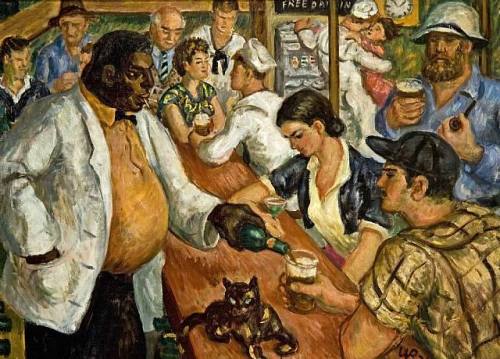
Waldo Peirce

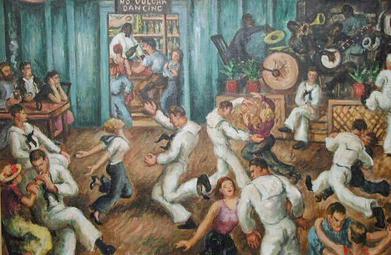
File:Silver Slipper by Waldo Peirce.jpg

"I'm a painter, not an artist".

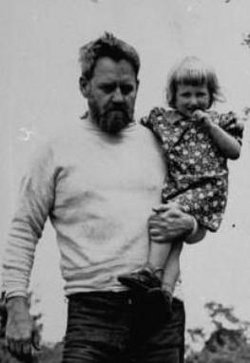
I always wanted to write a biography of Waldo Peirce, mainly because of two photographs, separated by about twenty years.  The first is of Peirce with his Harvard roommate; the second of Peirce with a writer friend on a beach in France in the 1920's.  There is nothing remarkable about either photograph, except that his college roommate would become one of the most influential and famous journalists of the early 20th century and his beach buddy would win the Nobel Prize for Literature.

There is much about Peirce that I really shouldn't care for, as he was born into money, had a first-class education shoved into his grudging hands, and was able to move easily through the seminal experiences of the American century, dragging along four wives, five children, and a considerable number of paintings.  It all came to him rather easily, along with rude health and vigor.  He once stated that he never worked a day in his life.

But, what's interesting about him is that he was what Goethe and Balzac referred to in their respective languages as a "life-artist".  As we have seen before with literary artists such as Yukio Mishima and James Magner, there is something compelling about those who wish not only to create tactile art, but to merge their lives with it so that it is a seamless expression of the sheer joy of living out of the bounds of normal expectation.

Peirce was sent to Phillips Andover and then to Harvard where his roommate was John Reed, eventual author of Ten Days That Shook The World, who was a great chronicler of the worker's movement in the United States and of the Russian Revolution.  So prized was Reed's sympathetic reporting during Lenin's rise to power that he is buried in the Kremlin Wall.  [Some may recall a film of thirty years back entitled "Reds", which starred Warren Beatty as Reed].  Reed and Peirce took a trip to Europe upon graduation and got into some trouble with the shipping line on the return voyage.  Peirce, upon leaving port, decided that the ship and its accommodations weren't to his liking so he jumped overboard and swam back to shore.  Upon discovering a missing passenger, the ship's captain had Reed locked in the brig under suspicion of murder.  There are a number of endings to this story, the most amusing is that Peirce was waiting at the dock upon Reed's arrival back in the United States, having taken a faster ship, thus untangling the potential murder charges.

During World War I, like other men who would one day claim distinction in the art world [a full list may be found here], Peirce joined the Red Cross Ambulance Corps and served with distinction at the front, gaining some French medals along the way.  After the war, and again like many Americans who served, he remained in Paris to be a part of the very large and creative expatriate community that included Ernest Hemingway, who became one of Peirce's life-long friends.


From a Harvard Magazine article from some years back:

Living and painting in Paris off and on in the 1920s, Peirce became friends with many of the notables who defined this period in the arts: Gertrude Stein, James Joyce, Sylvia Beach, Bernice Abbott, Archibald MacLeish, LL.B. ’19, John Dos Passos ’16—and Ernest Hemingway, another wartime ambulance driver. He and Hemingway stayed friends for life, a relationship not sustained by many other Hemingway associates from the Paris days; their letters to each other were filled with news, gossip, and witty passages, often interlaced with Spanish and French asides. Both men were voracious readers. Both were remarkable presences in a room, regaling others with ribald tales, great stories, and vivid word pictures. Their six-foot frames and beards were as impressive as their artistic talents. (Peirce was occasionally referred to as the “Hemingway of American painting,” but said once that made as much sense as “calling Hemingway ‘the Peirce of American literature.’”) Both men shared a formidable gusto for life and adventure—each married four times—and possessed an unending, consuming curiosity about the world around them. Fishing was their passion, and several times Peirce joined Hemingway in the Dry Tortugas and the Marquesas Keys. Never without a sketchbook, he captured these expeditions in oils and watercolors. When Hemingway’s face graced the cover of Time in 1937—he had just published To Have and Have Not—the magazine used a Peirce portrait of his friend holding a fishing pole, eyes focused on the line. The two can also be found together in other Peirce paintings—fighting bulls in Pamplona, drinking in Sloppy Joe’s in Key West, catching tarpon in the Gulf Stream.
On his many visits to Key West, Peirce was always sure to bring both his paints and his children, along with a rather singular sense of the duties of fatherhood.  Hemingway wrote in a letter:

"Waldo is here with his kids like untrained hyenas and him as domesticated as a cow. Lives only for the children and with the time he puts on them they should have good manners and be well trained but instead they never obey, destroy everything, don't even answer when spoken to, and he is like an old hen with a litter of apehyenas. I doubt if he will go out in the boat while he is here. Can't leave the children. They have a nurse and a housekeeper too, but he is only really happy when trying to paint with one setting fire to his beard and the other rubbing mashed potato into his canvasses. That represents fatherhood."


He lived a long life and left many works of art scattered about museums both great and small, including the Smithsonian.  The bulk of his estate was left to Colby College in Maine, near where he lived his final two decades, including not only paintings but some of the most entertaining letters one can ever hope to read.

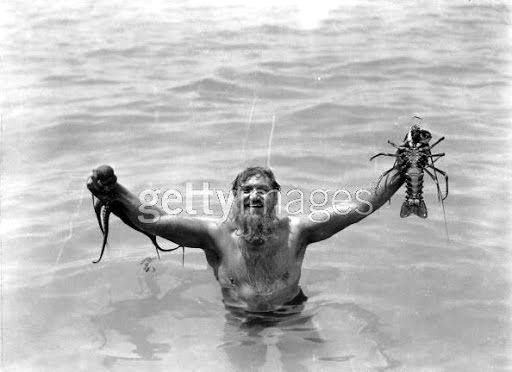
Getty image - Looks like Waldo!

Friday, October 26, 2018

Waldo Peirce

Originally published on January 25, 2013

File:Silver Slipper by Waldo Peirce.jpg

"I'm a painter, not an artist".

I always wanted to write a biography of Waldo Peirce, mainly because of two photographs, separated by about twenty years.  The first is of Peirce with his Harvard roommate; the second of Peirce with a writer friend on a beach in France in the 1920's.  There is nothing remarkable about either photograph, except that his college roommate would become one of the most influential and famous journalists of the early 20th century and his beach buddy would win the Nobel Prize for Literature.

There is much about Peirce that I really shouldn't care for, as he was born into money, had a first-class education shoved into his grudging hands, and was able to move easily through the seminal experiences of the American century, dragging along four wives, five children, and a considerable number of paintings.  It all came to him rather easily, along with rude health and vigor.  He once stated that he never worked a day in his life.

But, what's interesting about him is that he was what Goethe and Balzac referred to in their respective languages as a "life-artist".  As we have seen before with literary artists such as Yukio Mishima and James Magner, there is something compelling about those who wish not only to create tactile art, but to merge their lives with it so that it is a seamless expression of the sheer joy of living out of the bounds of normal expectation.

Peirce was sent to Phillips Andover and then to Harvard where his roommate was John Reed, eventual author of Ten Days That Shook The World, who was a great chronicler of the worker's movement in the United States and of the Russian Revolution.  So prized was Reed's sympathetic reporting during Lenin's rise to power that he is buried in the Kremlin Wall.  [Some may recall a film of thirty years back entitled "Reds", which starred Warren Beatty as Reed].  Reed and Peirce took a trip to Europe upon graduation and got into some trouble with the shipping line on the return voyage.  Peirce, upon leaving port, decided that the ship and its accommodations weren't to his liking so he jumped overboard and swam back to shore.  Upon discovering a missing passenger, the ship's captain had Reed locked in the brig under suspicion of murder.  There are a number of endings to this story, the most amusing is that Peirce was waiting at the dock upon Reed's arrival back in the United States, having taken a faster ship, thus untangling the potential murder charges.

During World War I, like other men who would one day claim distinction in the art world [a full list may be found here], Peirce joined the Red Cross Ambulance Corps and served with distinction at the front, gaining some French medals along the way.  After the war, and again like many Americans who served, he remained in Paris to be a part of the very large and creative expatriate community that included Ernest Hemingway, who became one of Peirce's life-long friends.


From a Harvard Magazine article from some years back:

Living and painting in Paris off and on in the 1920s, Peirce became friends with many of the notables who defined this period in the arts: Gertrude Stein, James Joyce, Sylvia Beach, Bernice Abbott, Archibald MacLeish, LL.B. ’19, John Dos Passos ’16—and Ernest Hemingway, another wartime ambulance driver. He and Hemingway stayed friends for life, a relationship not sustained by many other Hemingway associates from the Paris days; their letters to each other were filled with news, gossip, and witty passages, often interlaced with Spanish and French asides. Both men were voracious readers. Both were remarkable presences in a room, regaling others with ribald tales, great stories, and vivid word pictures. Their six-foot frames and beards were as impressive as their artistic talents. (Peirce was occasionally referred to as the “Hemingway of American painting,” but said once that made as much sense as “calling Hemingway ‘the Peirce of American literature.’”) Both men shared a formidable gusto for life and adventure—each married four times—and possessed an unending, consuming curiosity about the world around them. Fishing was their passion, and several times Peirce joined Hemingway in the Dry Tortugas and the Marquesas Keys. Never without a sketchbook, he captured these expeditions in oils and watercolors. When Hemingway’s face graced the cover of Time in 1937—he had just published To Have and Have Not—the magazine used a Peirce portrait of his friend holding a fishing pole, eyes focused on the line. The two can also be found together in other Peirce paintings—fighting bulls in Pamplona, drinking in Sloppy Joe’s in Key West, catching tarpon in the Gulf Stream.
On his many visits to Key West, Peirce was always sure to bring both his paints and his children, along with a rather singular sense of his parental duties.  Hemingway wrote in a letter:
"Waldo is here with his kids like untrained hyenas and him as domesticated as a cow. Lives only for the children and with the time he puts on them they should have good manners and be well trained but instead they never obey, destroy everything, don't even answer when spoken to, and he is like an old hen with a litter of apehyenas. I doubt if he will go out in the boat while he is here. Can't leave the children. They have a nurse and a housekeeper too, but he is only really happy when trying to paint with one setting fire to his beard and the other rubbing mashed potato into his canvasses. That represents fatherhood."

He lived a long life and left many works of art scattered about museums both great and small, including the Smithsonian.  The bulk of his estate was left to Colby College in Maine, near where he lived his final two decades, including not only paintings but some of the most entertaining letters one can ever hope to read.

Getty image - Looks like Waldo!

Thursday, November 29, 2012

A Word About The Friday Feature

Originally, I had planned on offering on Fridays bits and pieces from the memory of a mid-century American, both people and places.  In part, this was because the generation after mine [and the next] has been so poorly educated about religious, literary, or social history that it's as if they're an alien culture come to our planet with only vague understandings of our world gleaned through the partial information included on board space probes. 

So, I started to think of those from whom I draw some form of inspiration.  These are people I know, have known, or of whom I have heard.  As I started to write of them, I was surprised to discover how interconnected they all are, despite whatever discipline may have served as their medium.

I intend on putting together a list of fifty such folks during of the year.  I appreciate that these people are probably of limited interest to those who read this; but I will be keeping this discipline as part of a weekly spiritual exercise.

Here's the list so far:

Bruce McLaren
Art Pepper
Jim Steranko
Barbara Crafton
Lou Kallie
Raimundo Panikkar
Rell Sunn
Thomas Merton
Charlie Parker
Alan Watts
Samuel Isaac Joseph Schereschewsky
James Harold Flye [and James Agee]
Maxwell Perkins
Paul Bigsby
Jane Scott
William Augustus Muelenberg
Duke Kahanamoku
Jacques Cousteau
Yukio Mishima
Robert Manry
Howlin' Wolf

Tuesday, September 1, 2015

A Reminder about the Friday Feature

This exercise began when I realized that there were some people in danger of being lost to history, or of remaining virtually unknown, and I wanted to do my very small part to highlight their lives.  As weblogs are a personal medium, each of those profiled either served in some manner as an inspiration or were people with whom I had an interaction that I appreciated.

Sometimes these are famous people; others are known in a narrow field of endeavor, but no less deserving of some recognition.  Some are not well-known at all.  Each brought some point of grace, favor, industry, creativity, or cleverness to our world and left it a better place.  That's true even when their gift was shared with only one or two others.

The Coracle began a series in the summer of 2012 that posted every Friday for a year and highlighted the life of a particular individual.  A second series began in the fall of 2014.  Below is a list of the people profiled thus far with a link to their stories.  They really are worth getting to know.

As we have only four left, here's a look at what's been done over the past few years. While I will write occasionally of some personality should he or she occur to me, the regular Friday biographies will conclude on September 25th.

Series One:
Howlin' Wolf, blues musician and rock and roll influence
Bob Manry, small boat sailor and adventurer
Yukio Mishima, Japanese novelist, playwright, short story and film writer, and military adventurist
Jacques Cousteau
Duke Kahanamoku, the father of surfing 
William Augustus Muelenberg, unlikely innovator of the 19th century Episcopal Church
Jane Scott, rock and roll's grandmother
Paul Bigsby, guitar innovator and motorcycle mechanic
Max Perkins, mandarin of the 20th century American novel
James Harold Flye, the quintessential Episcopal priest
Samuel Isaac Joseph Schereschewsky, Bible translator
Alan Watts, Episcopal priest and Buddhist educator
Charlie Parker, jazz innovator
Thomas Merton, monk, hermit, and writer
Rell Sunn, The queen Of Makaha 
Raimundo Panikkar, priest, philosopher, and chemist 
Lou Kallie, jazz drummer and saloon keeper
Barbara Crafton, Episcopal priest and homilest
Jim Steranko, comic book artist and innovator
Art Pepper, jazz survivor
Bruce McLaren, racing car driver and builder
Cliff Young, farmer and ultra-marathoner
Sun Ra, space case
Matti Moosa, scholar, translator, deacon, and mentor
Debbie Harry, New Wave chanteuse 
The Hippie Who Sat Next to Me at Tony Mart's
James Magner, poet and mentor
Swein MacDonald, Highland seer
Waldo Peirce, artist and inspiration
John Fitch, racer and innovator
Malcolm Lowery, poet and miserable human being
Max Hardberger, modern-day pirate
Richard Race, landscaper
Hiram Bingham, historian, explorer, discoverer
John Watanabe, failed kamikaze pilot and bishop
Kathleen Kenyon, archaeologist
Captain Sir Richard Burton, fencer, explorer, translator, soldier, diplomat, and madman
James Agee, screenwriter and novelist
Madeleine L'Engle, writer and dinner guest 
Robert Crisp and Tommy MacPherson, unlikely war heroes  
Peter Scott, cat burglar
Wilfred Thesiger, the last of the explorers
Peter Marshall, preacher and chaplain to the U.S. Senate
Dingo, Mexican entrepreneur
Bruce Brown, documentarian and surfer
Joshua Slocum, solo circumnavigator
Mr. A, soul surfer
Thomas Edward Lawrence, archaeologist and adventurer
"Cool Breeze" and the Lyrical Gangster, an islander and his boat 

Series Two:
The Waterman, just some guy
Harvey Pekar, unlikely folk hero
Bernard Moitessier, Zen sailor
"Holy" Grail, old school D.I.
Ed "Big Daddy" Roth, industrial artist
Gerry Lopez, surf pioneer
Ted, Ricardo, and Curtis, three men I knew
Carol Kaye, ubiquitous bassist of pop
Ernie Anderson, Ghoulardi
Patti Smith, she does the rock, herself
Jacques Piccard, explorer of two atmospheres
B. Traven, international man of mystery
Carroll Shelby, Texas cobra
Lucien Aigner, he captured the world
Frank Miller, re-newer of myth
Kiyoshi Aki, he knew how to fall
Bob Simmons, hydrodynamisist
Igumen The Iconographer 
Anita O'Day, jazz singer
Alfred Pierce Reck, the proto-editor
D.A. Levy and the Cleveland Beats, poets
The Voices on the Radio: Freed, Franklin, and Dee
 Eugenie Clark, the shark lady
Dick Dale, king of the surf guitar
Dorothy Fields, Broadway and Hollywood's favorite lyricist
Hart Crane, the voice of new poetics
Rocky Colavito, baseball idol of nine-year-old boys
Bruce Meyers, fiberglass artist and professional dust-eater
Doc Pomus, blues mouth