Sunday, December 2, 2012
Saturday, December 1, 2012
Reminder: Quiet Morning In The Parish From 9am Until Noon Today
There will be a guided meditation and devotion every hour on the hour, as offered in the monastic style. Quietees may come and go as they please, of course.
Friday, November 30, 2012
.JPG)
Bruce McLaren
John Fitch came to mind the other day, when I read his obituary in one of the local newspapers. Of course, I could have read of him in the sporting press, too, as Fitch was a well-known figure in international motor sports, as well as an inventor of safety devices. I mostly knew him as the octogenarian who tended to drive around the Salisbury/Lakeville area a tad too fast. Shortly after his 90th birthday, I seem to recall that he made the local paper's "police log" for getting a speeding ticket. Anyway, Fitch and his wife were members of an Episcopal parish that neighbored mine, but his son and grandchild were members of my parish, so our paths crossed periodically.
I forget exactly how I wound up in a car with him driving, but there I was trying to distract myself from noticing how high the tachometer was revving or how a man of nearly 90 was driving almost that speed on the winding roads of Litchfield County. As we were in a car of Fitch's own design, we started talking about the desire of some drivers to build their own racing vehicles, and of their checkered history of success when they do so. We both agreed, however, that the best example of driver/engineer/car builder was Bruce McLaren.

Some of the most successful racing drivers come from places that I never would associate with automobiles. Juan Fangio was from the pampas of Argentina, Jimmy Clark was a rural Scotsman, and Jochen Rindt was an orphan from bomb-destroyed Hamburg. Bruce McLaren was from New Zealand. While nearby Australia has a fine tradition of producing racing champions, New Zealand was little more than bucolic farmland not known for its highways or its engineering or automotive industries; yet the country was to produce the most unique of competitors.
In an age where the drivers of the Grand Prix circuit tended to be flamboyant, as they included personalities such as Italian playboys, lesser members of the English peerage, and heirs of cosmetic fortunes, McLaren was remarkably unassuming. In fact, he would have been all but invisible if not for the fact that he could win races.
At the age of 22, he became the youngest Grand Prix winner ever when he triumphed at the United States Grand Prix in Watkins Glen, New York. When Henry Ford II wanted to challenge Enzo Ferrari's dominance in European racing, and prove that American cars were better than any other, he selected McLaren to drive Ford's entry in the 1966 24 Hours of Le Mans, the famous endurance race. McLaren won.

However, that wasn't what marked him as the sport's most innovative competitor. In the late 1960's, he decided to design and build his own racing cars. While he was not the first to do so [the American racer, Dan Gurney, had won the Belgian Grand Prix in 1967 in a car of his design named the "American Eagle"], it is safe to say that there has never been another driver who has so transcended in that role.

McLaren's cars became recognizable fixtures in the Grand Prix racing schedule, and in particular in the Canadian-American series that was tremendously popular in the late-60's and early 70's. At a time when cars still carried the livery of their nation of origin [British racing green, French racing blue, Italian racing red, etc.], McLaren created the unmistakable "New Zealand racing orange". The other reason that they were so recognizable is that they tended to put their drivers on the winner's podium.
[It should also be noted that, during the victory celebrations at the conclusion of any of the Grand Prix series of races, the driver's national anthem is played first, then followed by the national anthem of the car. Yes, that's right.],
Although no longer orange in color, as corporate sponsorships now trump national pride, McLaren cars are still familiar to racing fans and still tend to put their drivers on the winner's podium. In fact, in the season that has just concluded, the McLaren cars were responsible forsix seven of the twenty victories. [Maybe seven, as this is being written the day before the Brazilian Grand Prix. Yep, seven.]

Not a bad legacy for a humble driver from the middle of nowhere. My regret is that Bruce McLaren could not be a familiar sight at contemporary races, a sort of "grand old man" of the sport, relishing yet another victory in what many consider to be the most technologically advanced car, as he was killed testing one of his own racing cars [yes, he was also his own test driver] back in 1970.
However, while alive, he proved that a driver was not just a grease monkey or a mildly bemused aristocrat, but a full, creative partner in the medium of motor sports; and, since his death, a testimony to the eternal aspects of a dedication to quality.
I forget exactly how I wound up in a car with him driving, but there I was trying to distract myself from noticing how high the tachometer was revving or how a man of nearly 90 was driving almost that speed on the winding roads of Litchfield County. As we were in a car of Fitch's own design, we started talking about the desire of some drivers to build their own racing vehicles, and of their checkered history of success when they do so. We both agreed, however, that the best example of driver/engineer/car builder was Bruce McLaren.
Some of the most successful racing drivers come from places that I never would associate with automobiles. Juan Fangio was from the pampas of Argentina, Jimmy Clark was a rural Scotsman, and Jochen Rindt was an orphan from bomb-destroyed Hamburg. Bruce McLaren was from New Zealand. While nearby Australia has a fine tradition of producing racing champions, New Zealand was little more than bucolic farmland not known for its highways or its engineering or automotive industries; yet the country was to produce the most unique of competitors.
In an age where the drivers of the Grand Prix circuit tended to be flamboyant, as they included personalities such as Italian playboys, lesser members of the English peerage, and heirs of cosmetic fortunes, McLaren was remarkably unassuming. In fact, he would have been all but invisible if not for the fact that he could win races.
At the age of 22, he became the youngest Grand Prix winner ever when he triumphed at the United States Grand Prix in Watkins Glen, New York. When Henry Ford II wanted to challenge Enzo Ferrari's dominance in European racing, and prove that American cars were better than any other, he selected McLaren to drive Ford's entry in the 1966 24 Hours of Le Mans, the famous endurance race. McLaren won.
However, that wasn't what marked him as the sport's most innovative competitor. In the late 1960's, he decided to design and build his own racing cars. While he was not the first to do so [the American racer, Dan Gurney, had won the Belgian Grand Prix in 1967 in a car of his design named the "American Eagle"], it is safe to say that there has never been another driver who has so transcended in that role.
McLaren's cars became recognizable fixtures in the Grand Prix racing schedule, and in particular in the Canadian-American series that was tremendously popular in the late-60's and early 70's. At a time when cars still carried the livery of their nation of origin [British racing green, French racing blue, Italian racing red, etc.], McLaren created the unmistakable "New Zealand racing orange". The other reason that they were so recognizable is that they tended to put their drivers on the winner's podium.
[It should also be noted that, during the victory celebrations at the conclusion of any of the Grand Prix series of races, the driver's national anthem is played first, then followed by the national anthem of the car. Yes, that's right.],
Although no longer orange in color, as corporate sponsorships now trump national pride, McLaren cars are still familiar to racing fans and still tend to put their drivers on the winner's podium. In fact, in the season that has just concluded, the McLaren cars were responsible for
Not a bad legacy for a humble driver from the middle of nowhere. My regret is that Bruce McLaren could not be a familiar sight at contemporary races, a sort of "grand old man" of the sport, relishing yet another victory in what many consider to be the most technologically advanced car, as he was killed testing one of his own racing cars [yes, he was also his own test driver] back in 1970.
However, while alive, he proved that a driver was not just a grease monkey or a mildly bemused aristocrat, but a full, creative partner in the medium of motor sports; and, since his death, a testimony to the eternal aspects of a dedication to quality.
Thursday, November 29, 2012
A Word About The Friday Feature
Originally, I had planned on offering on Fridays bits and pieces from the memory of a mid-century American, both people and places. In part, this was because the generation after mine [and the next] has been so poorly educated about religious, literary, or social history that it's as if they're an alien culture come to our planet with only vague understandings of our world gleaned through the partial information included on board space probes.
So, I started to think of those from whom I draw some form of inspiration. These are people I know, have known, or of whom I have heard. As I started to write of them, I was surprised to discover how interconnected they all are, despite whatever discipline may have served as their medium.
I intend on putting together a list of fifty such folks during of the year. I appreciate that these people are probably of limited interest to those who read this; but I will be keeping this discipline as part of a weekly spiritual exercise.
Here's the list so far:
Bruce McLaren
Art Pepper
Jim Steranko
Barbara Crafton
Lou Kallie
Raimundo Panikkar
Rell Sunn
Thomas Merton
Charlie Parker
Alan Watts
Samuel Isaac Joseph Schereschewsky
James Harold Flye [and James Agee]
Maxwell Perkins
Paul Bigsby
Jane Scott
William Augustus Muelenberg
Duke Kahanamoku
Jacques Cousteau
Yukio Mishima
Robert Manry
Howlin' Wolf
So, I started to think of those from whom I draw some form of inspiration. These are people I know, have known, or of whom I have heard. As I started to write of them, I was surprised to discover how interconnected they all are, despite whatever discipline may have served as their medium.
I intend on putting together a list of fifty such folks during of the year. I appreciate that these people are probably of limited interest to those who read this; but I will be keeping this discipline as part of a weekly spiritual exercise.
Here's the list so far:
Bruce McLaren
Art Pepper
Jim Steranko
Barbara Crafton
Lou Kallie
Raimundo Panikkar
Rell Sunn
Thomas Merton
Charlie Parker
Alan Watts
Samuel Isaac Joseph Schereschewsky
James Harold Flye [and James Agee]
Maxwell Perkins
Paul Bigsby
Jane Scott
William Augustus Muelenberg
Duke Kahanamoku
Jacques Cousteau
Yukio Mishima
Robert Manry
Howlin' Wolf
Advent Series
During the season of Advent, on Thursdays at 7pm in the parish house, we will offer a program open to all adults. Since we learn our first "theology" from hymns and other types of church music, we will look at what the traditional hymns of the church say to us about our system of belief and the primacy of faith.
This will include hymns that are familiar to us, including those we learned as children, and those that we often sing during the course of the year. As this is particular to the season of Advent, we will look especially at the theology of the Advent and Christmas hymns and carols.
This will include hymns that are familiar to us, including those we learned as children, and those that we often sing during the course of the year. As this is particular to the season of Advent, we will look especially at the theology of the Advent and Christmas hymns and carols.
Thursday's Prayer
O God, Who are the unsearchable abyss of peace, the ineffable sea of love, the
fountain of blessings, and the bestower of affection, Who sends peace to those
that receive it; open to us this day the sea of Your love, and water us with the
plenteous streams from the riches of Your grace. Make us children of quietness,
and heirs of peace. Kindle in us the fire of Your love; sow in us Your fear;
strengthen our weakness by Your power; bind us closely to You and to each other
in one firm bond of unity; for the sakd of Jesus Christ. Amen. - 1st century Syriac prayer.
Wednesday, November 28, 2012

Archaeological News
STONE Age records of the first native people in Britain has been found after archaeologists discovered three houses from nearly 8,000 years ago that could ‘rewrite the history books'.
Every time scientists and historians think they have it all figured out, this is what happens.
Every time scientists and historians think they have it all figured out, this is what happens.
Tuesday, November 27, 2012
Deanery Meeting Tonight
At 6:30pm in the parish house. Our own Christine Meyer will be offering the program, "The Stranger You Know", which concerns steps one may take to prevent child abuse.
Tuesday's Quotation
"The people of God are not merely to mark time, waiting for God to step in and set right all that is wrong. Rather, they are to model the new heaven and new earth, and by so doing awaken longings for what God will someday bring to pass." - Philip Yancey.
Monday, November 26, 2012
This Week's Lesser Feasts
November 28: King Kamehameha IV and Queen Emma

Please note the this is Kamehameha IV and not I or V, as there was a clear superiority of #4 over the others, much like France's Louis XIV was of a quality greater than Louis XVI. If this confuses you, blame your high school history teacher. Also, it's pronounced Cam-May-Ha-May-Ha.
As opposed to the other Kamehamehas, in his role as king of Hawaii in the mid-1800's, #4 showed a true commitment to the principles of enlightened leadership, going so far as to convert to Christianity, as he was attracted to its notions of social service; ideas that were also a part of the Polynesian sense of a higher good. As he had toured England as a young man, and had been in attendance at many services of the Church of England, he preferred Anglicanism as his form of Christian devotion, especially as he found the liturgies of the church to have a profound and lasting meaning. Clearly, he was a man not only of spiritual maturity but also one of good taste.
Kamehameha IV even would, after his conversion, translate the Book of Common Prayer into the Hawaiian language, along with portions of the hymnal.
His wife, Queen Emma, is the unofficial patron saint of surfing. This is not because she could shred waves like a champ, dude, but because she, above all others, embodied the "aloha spirit" that was, and for many still is, the guiding nature of that rather odd sport. As such, Emma was devoted to the poor and the ill, built schools, a hospital, and what is now the Episcopal Church's cathedral in Honolulu. She was much beloved by her people and even counted Queen Victoria I as a lifelong friend. Some of their correspondence, which may occasionally be viewed on display at the ‘Iolani Palace, reveals the deep respect and shared wisdom of these two women.
[Elsewhere in The Coracle, one may read of Rell Sunn, the surfing champion who described the "aloha spirit" thusly: "The aloha spirit is real simple. You give and you give and you give from the heart, until you have nothing else to give."]
O Sovereign God, who raised up (King) Kamehameha (IV) and (Queen) Emma to be rulers in Hawaii, and inspired and enabled them to be diligent in good works for the welfare of their people and the good of your Church: Receive our thanks for their witness to the Gospel; and grant that we, with them, may attain to the crown of glory that never fades away; through Jesus Christ our Savior and Redeemer, who with you and the Holy Spirit lives and reigns, one God, for ever and ever. Amen.
December 1: Nicholas Ferrer, 1592-1637
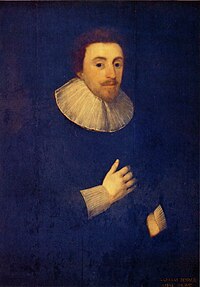
Ferrer was a deacon in the Church of England who created one of the last communities of faith based on the Celtic, and pre-Roman, form of Christianity. He and his companions took an abandoned church in Huntingtonshire, England, restored it and turned into a center for worship, education, and, as a form of early clinic, place for the address of community health issues.
It worked well until Cromwell's minions destroyed it in the name of Puritanism. Yes, what a gift that strain of Christianity has brought to our common experience.
Ferrer had died nine years before his community's forced dissolution, yet his vision, and the hamlet that housed his community, that of Little Gidding, has remained fixed in the spiritual imagination of subsequent generations of Anglicans. Even that arch-Anglican, T.S. Eliot, would name a portion of his poetic work, Four Quartets, after Ferrer's community.
Lord God, make us worthy of your perfect love; that, with your deacon Nicholas Ferrar and his household, we may rule ourselves according to your Word, and serve you with our whole heart; through Jesus Christ our Lord, who lives and reigns with you and the Holy Spirit, one God, for ever and ever. Amen.


Please note the this is Kamehameha IV and not I or V, as there was a clear superiority of #4 over the others, much like France's Louis XIV was of a quality greater than Louis XVI. If this confuses you, blame your high school history teacher. Also, it's pronounced Cam-May-Ha-May-Ha.
As opposed to the other Kamehamehas, in his role as king of Hawaii in the mid-1800's, #4 showed a true commitment to the principles of enlightened leadership, going so far as to convert to Christianity, as he was attracted to its notions of social service; ideas that were also a part of the Polynesian sense of a higher good. As he had toured England as a young man, and had been in attendance at many services of the Church of England, he preferred Anglicanism as his form of Christian devotion, especially as he found the liturgies of the church to have a profound and lasting meaning. Clearly, he was a man not only of spiritual maturity but also one of good taste.
Kamehameha IV even would, after his conversion, translate the Book of Common Prayer into the Hawaiian language, along with portions of the hymnal.
His wife, Queen Emma, is the unofficial patron saint of surfing. This is not because she could shred waves like a champ, dude, but because she, above all others, embodied the "aloha spirit" that was, and for many still is, the guiding nature of that rather odd sport. As such, Emma was devoted to the poor and the ill, built schools, a hospital, and what is now the Episcopal Church's cathedral in Honolulu. She was much beloved by her people and even counted Queen Victoria I as a lifelong friend. Some of their correspondence, which may occasionally be viewed on display at the ‘Iolani Palace, reveals the deep respect and shared wisdom of these two women.
[Elsewhere in The Coracle, one may read of Rell Sunn, the surfing champion who described the "aloha spirit" thusly: "The aloha spirit is real simple. You give and you give and you give from the heart, until you have nothing else to give."]
O Sovereign God, who raised up (King) Kamehameha (IV) and (Queen) Emma to be rulers in Hawaii, and inspired and enabled them to be diligent in good works for the welfare of their people and the good of your Church: Receive our thanks for their witness to the Gospel; and grant that we, with them, may attain to the crown of glory that never fades away; through Jesus Christ our Savior and Redeemer, who with you and the Holy Spirit lives and reigns, one God, for ever and ever. Amen.
December 1: Nicholas Ferrer, 1592-1637
Ferrer was a deacon in the Church of England who created one of the last communities of faith based on the Celtic, and pre-Roman, form of Christianity. He and his companions took an abandoned church in Huntingtonshire, England, restored it and turned into a center for worship, education, and, as a form of early clinic, place for the address of community health issues.
It worked well until Cromwell's minions destroyed it in the name of Puritanism. Yes, what a gift that strain of Christianity has brought to our common experience.
Ferrer had died nine years before his community's forced dissolution, yet his vision, and the hamlet that housed his community, that of Little Gidding, has remained fixed in the spiritual imagination of subsequent generations of Anglicans. Even that arch-Anglican, T.S. Eliot, would name a portion of his poetic work, Four Quartets, after Ferrer's community.
Lord God, make us worthy of your perfect love; that, with your deacon Nicholas Ferrar and his household, we may rule ourselves according to your Word, and serve you with our whole heart; through Jesus Christ our Lord, who lives and reigns with you and the Holy Spirit, one God, for ever and ever. Amen.
Friday, November 23, 2012
Art Pepper
There is a moment, early in a recording by Miles Davis' The Rhythm Section, when the saxophonist seems to quiver a little, as if he were unfamiliar with the music, had lost the ability to read from the sheets, or transpose in his head, or wasn't quite sure where he was. If you guessed all of the above, you'd be right.
Art Pepper, the saxophonist, had forgotten that he was to record in the studio that day; mainly because he was coming off of a heroin high and was not quite sure of the year [it was 1957], the place [it was Los Angeles] or the location of his instrument [it was under the bed in a rather poor state of maintenance.] He managed to get to the studio, though, in some sort of condition; a studio filled with musicians of whom he had heard [everyone knew of Miles Davis by that time], but with whom he had never worked. Since arriving at a studio in rather rough shape is not abnormal in jazz circles, they took it more or less in stride, as long as Pepper could play.
And play he did. While a little rough at first, Art Pepper managed, on that long day in LA, to record one of the seminal works in jazz, "Art Pepper meets The Rhythm Section".

Pepper's life was not easy. He struggled for many years with drug and alcohol addiction, lost out on gigs and chances for fame, went for long periods without employment and, seemingly, without friends. But, talent will out, and he became a clean, sober, and trustworthy studio musician, and then, with no small amount of help from Davis and others, the originator of what's now recognized as the West Coast jazz sound.
If you wish to read more of him, I cannot recommend more strongly his autobiography, Straight Life.
I could speak of him endlessly, but it's best to just listen to what he could do, while imagining yourself driving over the 6th Street bridge in LA in the middle of the night with the top down; or looking out over that sparkling city from Mulholland Drive.
Subscribe to:
Posts (Atom)