Friday, March 8, 2019

Gerry Lopez

“Okay...I guess this is a good day to die!" - Gerry Lopez, when first being towed offshore to ride a mega-wave.
________________________________________________________________

Bear with me, but I find a lot of similarity in the histories of surfing and Christianity.

Both began in simplicity and, over time, became too complicated to carry their own weight. Christianity was a simple movement realized from person to person and nimble in its spiritual expression, especially when compared to the monolithic religions of the era. Surfing was the avocation of people young and old riding wooden boards on unnamed beaches that weren't always the most accessible.

By the fourth century, Christianity had become the "official" religion of the Roman Empire and, while that enabled its rapid spread across the Western world, it became intertwined with empires, kingdoms, and governments to the point that the spiritual and the venal were inseparable.

Surfing, in the days of the wahines, groms, hodaddies, and kooks was a relaxed and uncommon pursuit for a variety of age groups.  In the 1950's, World War II and Korean War veterans, in particular, found it a pleasant diversion from the nightmares caused by long-resolved battles*.  As it became popular in general culture, and the source of a lot of attention from adolescents with money to spend, it naturally attracted the marketers who created the monster known as the "surf lifestyle".  Nowadays a 14-year-old with a natural affinity for reading waves and balancing on a board can become the multi-millionaire spokesman for a power drink company.

Both Christianity and surfing suffered from this growth and both are now entering a post-institutional phase.  While there are a lot of people attempting to lure Christendom back to its effective and simple days of just being Christianity, surfing is still making way too much money for those in charge of merchandising and contests for there to be a general recognition of the effect of the loss of simplicity. However, a growing number of young surfers are attempting to reclaim those days when it was the surf and not the sponsorship where watermen found satisfaction.

The man himself.

And, in that quest, they tend to turn for inspiration to the guy known as Mr. Pipeline.

Once in Huntington Beach, I was in the "green room".  Just that once.  It doesn't happen on the east coast really, so it was rather special.  The green room is that tube formed by a rolling wave in which good surfers in good surf can place themselves.  While mine was a good wave, I'm not that good of a surfer, so it was probably for only five seconds or so, but on my deathbed I will regard it as one of the best moments of my life.  I can't imagine what it's like regularly to abide in the room and, in sublime confidence and ability, reach out and touch that dynamic wall of water.


Gerry Lopez has been in the green room so often he should move an easy chair in there.  That really shouldn't be a surprise, given the milieu into which he was raised.  Lopez was born in Honolulu in 1948, educated at the prestigious Punahou School [which, through the years, also counted the dance coach Cari Ann Inaba, the politician Barack Obama, the discoverer of Machu Picchu, Hiram Bingham, pro golfer Michelle Wie, Chinese president Sun Yet Sen, and Olympian and actor Buster Crabbe among its students] which used to stress development of both body and mind.  Lopez extended his education when, at the age of 14, he became the Hawaiian State Surfing Champion.

Nowadays, he would be the toast of every surf beach in the world and a fair number of advertising agencies, too; probably with his photo of the cover of a variety of surfing periodicals.  But, in 1962, he was given a simple trophy in a makeshift ceremony and left to his own devices.  He would, as he matured, develop a recognizable style that, to those who have never surfed, appeared casual and offhand, but was anything but; and he would challenge greater and greater waves.

Lopez and his friends started to experiment with the enormous waves of Oahu's North Shore around the time that surfboard design was changing from the rather simple solid wood boards to those made of fiberglass with channels, subtle curving known as foil and rocker, and downrailers.  The new design made even the most daunting waves accessible.


It's more complicated than you thought, isn't it?

Lopez dedicated himself to what came to be known in lore and legend as the "Banzai Pipeline", a surf break in the reef system that produced massive waves that were beyond the technological capacity of the original surfboard.  From a familiar online source:
Pipeline is notorious for huge waves which break in shallow water just above a sharp and cavernous reef, forming large, hollow, thick curls of water that surfers can tube ride. There are three reefs at Pipeline in progressively deeper water further out to sea that activate according to the increasing size of approaching ocean swells.
In other words, if either the surfer or his/her equipment is not up to it, a rider will be severely injured or killed in rather short order.  In the 1960's, Gerry Lopez took a new board design into the surf at Sunset Beach Park and rode the tubes over and over again.  By his 25th birthday he was recognized as the best tube-rider in the world and earned the nickname "Mr. Pipeline".  A few years later, the annual competition on the North Shore was re-named the Gerry Lopez Pipeline Masters.

It's probably better to simply stand on the beach and admire them rather than get crushed.

There are many athletes who have become champions in their field and then, as age or injury remove them from competition, retire and find pursuits that are fulfilling or, at the very least, keep them mostly out of jail.  Shortly after being recognized as the champion he was, Lopez, while still competing, made a move into the next phase of the sport.  Using his intimate knowledge of what worked on a surfboard and what didn't, he began to design and market his own line of surfboards, memorable for their lighting bolt design.


By the time I had enough money to buy a proper surfboard, Lopez boards were the ones to have. Unfortunately, by then Lopez boards were too expensive even for those of us who thought we had enough money.  Since Mr. Pipeline knew what it was like to ride a three-story wave, these shaped bits of fiberglass and foam were renowned for their stability and speed.  Also, as longboards gave way to shortboards during the 1980's and 90's, enabling surfers to spin, wheel, and climb on the waves as if they were on skateboards, it was the Lopez design that served as the foundation for what was to come.

In other words, this:


Became this:


With his fame within the sport, and his fortune made from his surfboards, Lopez continued to give to the community, enabling scholarships, study programs, and surf competitions.  And, like his contemporary in the martial arts world, Bruce Lee, he discovered lucrative and rewarding work in Hollywood, teaching actors how to look authentic on a surfboard.  He would even take roles in films from time to time.

However, as with any successful venture, Lopez would see his sport become more and more commercialized and complicated.  Somewhere, it had lost its loopy, easy-going fun and become just another over-serious mega-business.  At the nadir of this transformation, Mr. Pipeline, the super-surfer from the North Shore of Hawaii, left the coast, moved to Oregon, and became...a snowboarder.  Yeah, I know.

Now in his mid-60's, Lopez has come to be considered the "Yoda" of surfing.  This summer, in my eccentric role as a chaplain to the Christian Surfers organization, I noticed that Lopez's autobiography, Surf Is Where You Find It, was the second most popular book read on the beach in between wave sets.  [Given the organization, it should come as no surprise that the most popular was The Holy Bible, King James Version.]  When asked about it, the young people confessed a fascination for those early "Gidget" days of surfing, where it was less a sport and more a community-building activity with a mutualized support structure.  It wasn't so much about trying to out-do one another on a wave [although a natural sense of competition is always present] as it was celebrating the joys of a common activity, one that tended to obviate the constraining social structure of its time.  

Remarkably, at a time when young Christians are attempting to do the same with their faith, young surfers are trying to find that meaningful center in their pursuit; the center that has been obscured by much less important concerns.  Perhaps both surfers and Christians should take heed of Lopez's wisdom, "Life is an adventure, and when we see it as such it becomes more fun and enjoyable and less of a burden and toil."   If faith is life, then that sagacity is doubly true.


[*I'll bet that you never realized surfing was once an effective treatment for what's now called Post-Traumatic Stress Reaction.]

Thursday, March 7, 2019

Thursday's Place: Don the Beachcomber's

Don the Beachcomber's
Huntington Beach, California


In both the creation of "tiki culture" and the support of the local, middle-class surf community, this week's place has been irreplaceable.  Actually, we'll see about that, as Don's closed last year; although the owners assure the public that it will be opened, elsewhere, again.

When your name is Ernie Gantt and you're from some dough-pop town in eastern Texas where there isn't much at all to do and nothing going on, you grow up yearning for a world of adventures in exotic locales.  When you're old enough to leave home, the best way to realize those dreams in 1926 is to become a merchant seaman and sail off to those realms of exotica.

No one really knows what happened during Gantt's five years in the South Seas, but when he found himself beached and working as a bartender in Hollywood, he began to build his personal legend around his merchant experiences, however fanciful they may have been.  When he opened his own bar he began his metamorphosis from Ernie Gantt to Donn Beach, adventurer and world traveler.  To facilitate this transformation, he jammed any kind of nautical or tropical flotsam and jetsam he could find on the junk market into his bar, now named Don the Beachcomber's, and began his real adventures.


It wasn't just the tropical ambiance that his customers enjoyed, it was also Gantt's Beach's talent for mixing drinks; a talent that was truly remarkable.  As he was a small businessman always struggling to make payroll, he relied on recipes made from rum, which was in those immediate post-prohibition days the cheapest booze on the market.  The rum also complimented his decor.  From that base he patented around thirty distinct concoctions.


Drink after drink was invented by Beach, including favorites such as the Navy Grog, the Cobra's Fang, and the classic Zombie.  Between the drinks and the rattan stools and the ferns, not to mention the first examples of "Chinese cuisine" to be served in the United States, Beach created the tiki bar in that windowless and dark saloon.  When celebrities [Bogart, Bacall, Howard Hughes, Erroll Flynn, Clark Gable, Bing Crosby, David Niven, Ernest Hemingway, etc.] discovered the place, Beach was able to expand from the original location to a chain of Don the Beachcomber's that ranged from L.A. County to West Lafayette, Indiana.


While in my New York years I was familiar with Beach's biggest competitor, Trader Vic's, from its location at the Plaza Hotel, I didn't discover what was the last remaining Don the Beachcomber's in Huntington Beach until a furtive, four-day surf trip to SoCal about a decade ago.  On the final night, my surf buddies suggested dinner at the quintessential tiki bar and it was perfect.  Not only was it still a place that served over-sweetened "Chinese" food and tiki drinks, but we were entertained by a collection of Polynesian musicians and hula girls.  The indoor waterfall was particularly splendid, as were the tales told by the local surf bum habitues.  


As Huntington Beach is known colloquially as "Surf City", and as surfers on both coasts are as appreciative of irony as the next person, Don's was a pleasant hang-out for the middle-class and wealthier shredders.  Well, until the local taxes worked their inevitable magic and it closed last year.

The final owners maintain a lively Facebook page and website, however, and the big fish sign is still in place on the Pacific Coast Highway, just waiting for someone else to come along and resurrect that tiki god one more time.


Lenten Wave #2


" … the world is a work of art, set before all for contemplation, so that through it the wisdom of Him who created it should be known …"  — St. Basil

Wednesday, March 6, 2019

Lenten Wave #1


Acknowledging the old surfing expression that a surfer learns something from every wave, big or small, junky or sublime, we again offer during this Lenten season a quotation to serve as an aid in daily meditation.  If used so, one may learn something from every quote.

Today's quotation is from Alan Watts, who was, before he become the premier apologist of Eastern religion in the United States, an Episcopal priest:

"Religion is not a department of life; it is something that enters into the whole of it."

Tuesday, March 5, 2019

Not Exactly Breaking News

Students are getting drunk off vanilla extract, school warns

Neat

Scientists plan to map entire ocean floor by 2030

Not News, Really, But I'm Grateful That This is Finally Worthy of Commentary

The Geography of Partisan Prejudice: A guide to the most—and least—politically open-minded counties in America

Check the link for the map.  It's no surprise to me that educated whites are the most politically prejudiced.  I've been working among them in Connecticut for a very long time and it's often all they can talk about.

This is the third mainstream article in the past week that noted a sudden awareness of something that's been obvious for decades.  I wonder what's up.

A Pungent Observation

I've noticed that three potential candidates for the Democratic Party nomination have given press conferences and/or made political commercials while wearing what looks to be a brand new Carhartt work jacket.  This, I'm guessing, is the new sign of "authenticity" as tested through focus groups.

[Disclaimer:  I have one.  I work in it.  It looks like it.]

This Week in Clergy Culture

Here’s why you shouldn’t cremate radioactive dead people

Sunday, March 3, 2019

It's Satire, But Is It, Really?

Everyone Who's Never Read A History Book Shocked As Socialist Turns Into Authoritarian At First Whiff Of Power
"Wow, a socialist who was elected on her promises to work 'for the people' is suddenly telling everyone she's in charge and they have to listen to her? That's really weird," said one man in Portland who dropped his world history class in high school. "I would have thought socialists never suddenly transform into power-hungry maniacs as soon as they get their first high from telling people what to do."
"It's just, I've never heard of that happening in the past, say, 100 years or so," he added before he had to return to his Starbucks shift, wrapping his work apron around his hammer and sickle T-shirt.

Reasons That I Enjoy the Internet


Friday, March 1, 2019

Really? You Just Figured That Out?

Why Social Justice Is Killing Synagogues and Churches
Data suggests that the more a religious movement is concerned with progressive causes, the more likely it is to rapidly lose members
Most of us caught on to it about thirty-some years ago.  After all, "get woke, go broke".

Ed "Big Daddy" Roth


"...expect criticism; if you can't do it get help; you don't need fancy tools or a fancy garage; and if you fulfill your duty Heavenly Father will bless you in what you do."
__________________________________________________________________________


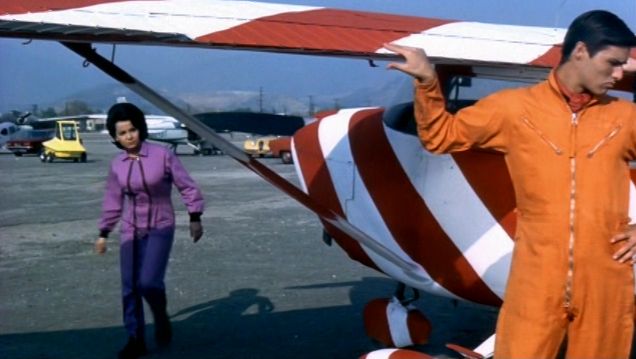
Do you see that little yellow vehicle in the background behind Annette Funicello?  It really deserved to be the star of Beach Blanket Bingo, probably the best of those terrible mid-sixties beach movies. That's just my personal opinion, of course, but for all of the songs, surfboards and bikinis in that film, it was that stray bit of decoration that remained in my memory and imagination.  [Well, maybe Donna Michelle was a close second.]

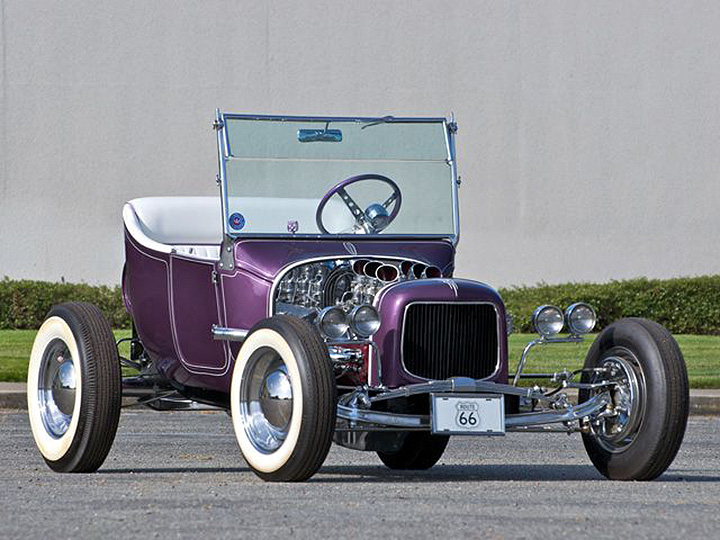
The Surfite in full glory at a recent auto show.

The car was "The Surfite" and was one of many, many creations, automotive and otherwise, of Ed "Big Daddy" Roth, one of the most original, prolific, and ignored American artists of the post-WWII period. I knew of the cars not because they would ever be seen on the east side of Cleveland, but because they were well represented in the modeling aisle of my local Woolworth's.


My fellow juvenile delinquents and I could never get enough of the models of cars designed by Big Daddy and news of a new product on the five and dime shelves would make the rounds of recess at Lincoln Elementary School with all of us attempting to be the first to score fifteen cents for the model and another ten for the custom paint set.  Yes, life was that exciting in Ohio in the early '60's.

About five years later, when I discovered surfing, I was amazed to discover that Big Daddy was an influence in the design of what was becoming called the "surf lifestyle".  When I was older still, and the owner of a battered BMW R100 motorcycle, I discovered that Roth was still an influence in the burgeoning bike customization industry.  I've studied everyone from Xenokrates of Sicyon to Salvador Dali, even married an art history major, and can't recall any artist having such a trans-cultural influence through graphic, commercial, animated, and industrial art.

Ed Roth, like his school of art, was born in L.A. County.  He lived through the period when his city transformed from orange groves and farmland to the entertainment capital of the world with that urge to entertain influencing all other endeavors.  For some reason it also became, by the late 1950's, the car and motorcycle customization capital of the world.

Roth originated automobile pin-striping at his art/auto body/t-shirt shop in 1959 and financed his operation mainly by creating one-of-a-kind designs airbrushed onto t-shirts and sold at various hot rod shows.  The designs were bizarre, sometimes horrifying, and certainly different from anything else that was on offer in the days of Ozzie and Harriet.  It's no wonder that the burgeoning car/cycle crowd found them evocative.  As the dominant animal in southern California was Mickey Mouse, an icon loathed by most normal people, Roth created a dark alternative.

Behold, the Rat Fink:


Whether or not the reader has seen this particular icon, it is the spirit animal of an entire school of art that has influenced almost everything we have seen during the last fifty years.  Certainly, it was ubiquitous in youth culture as it was found on t-shirts, motorcycle helmets, car models, shift knobs, guitars, coin banks, barware, decals, and bobble head dolls.  In 6th Grade, I had a collection of Rat Fink erasers for my #2 pencils.

And hats, too.  Especially the "hillbilly crash helmet" modeled above by its maker.

Along with other tactile artists such as Dean Jeffries [who created, among other works, the original dune buggy and the car driven by The Monkees on their eponymous TV show], graphic artist Von Dutch, George and Sam Barris [of the original Bat-mobile], and other car, motorcycle, and guitar customizers, tattoo artists, cartoonists, fashion designers, and musicians, Roth and his cadre were the representatives of what is now known as Kustom Kulture.

From a popular information site:
Kustom Kulture is usually identified with the greasers of the 1950s, the drag racers of the 1960s, and the lowriders of the 1970s. Other subcultures that have had an influence on Kustom Kulture are the Skinheads, mods and rockers of the 1960s, the punk rockers of the 1970s, the metal and rockabilly music, along with the scooterboys of the 1980s, and psychobilly of the 1990s. Each separate culture has added their own customizations to the cars, their own fashions, influenced the music, and added their own ideas of what is cool, of what is acceptable, and what is not. Everything from wild pinstriped paintjobs, to choptop Mercurys, to custom Harley-Davidson and Triumph Motorcycles, to metal-flake and black primer paint jobs, along with music, cartoons, and monster movies have had an impact on what defines anyone and anything who is part of this automobile subculture.
While an artist, t-shirt designer, musician [his band was "Mr. Gasser & the Weirdos"] and fashion icon, it was with cars that Roth made his biggest impact.   Originally, Big Daddy was the guy who simply put pinstripes on cars, which he then expanded to custom colors and media, making the metal flake finish popular in the custom world.  And then came the most wonderful construction material of all, the one that transformed surfboard shaping, watercraft design, and auto body fabrication.

By the mid-20th century, both DuPont and Owens-Corning had perfected the combination of glass strands, silica, and polyester resin to create what we now recognize as fiberglass.  With this medium, car bodies could be shaped in ways not possible with sheet metal, provide for a lighter overall weight, thus boosting horsepower, yet retain the strength necessary to carry the chassis.  When Roth realized what this newest form of plastic could do, he was limited only by his imagination; if it had any limits, that is.

While I could describe the cars that Roth would create, in forms and styles never before seen, it's far easier to show them.

Tweedy Pie, 1964
 

Road Agent, 1965


Druid Princess, 1966


Beatnik Bandit, 1960


Mysterion, 1963


Orbitron, 1964


Tellingly, the fate of the Orbitron sums up the reality of Roth's world.  It was originally sold for $750 [yes, that's right] to another KK customizer who, in turn, sold it to a collector in Texas, who sold it to a carnival owner in Chihuahua, Mexico.  By 1991, the Orbitron had disappeared. Although, there were rumors....

Following up on those rumors in 2007, a professional car finder [that's an actual job] discovered the Orbitron, or what was left of it, being used as a trash trailer for the owner of an...ahem..."adult lifestyle" store in Juarez.  After considerable negotiation, the hulk was brought back to southern California and recently had its full restoration completed.

Much like the Orbitron, Kustom Kulture and the works of Roth have never quite disappeared, although they have morphed into other media.  On any given evening, cable TV is filled with "reality" shows about customizing cars and motorcycles, skateboard and surfing periodicals are mostly ads for the ephemera of the sports rather than athletic pursuit, and colorful t-shirts sporting characters and ironic statements are the norm even in Brooklyn in winter.  What was once a sub-genre lost in its own orbit has since managed to influence the mainstream without having given up its edginess.

A lot of that spirit of defiance can be traced to Roth.  Once, when on his way to some car show in some middle-of-nowhere location, driving himself in one of his less dramatic creations, he pulled to the side of the road for the evening, sleeping in the car.  As he was 6'4", his bare feet were left sticking out the window and, when a fan with a camera recognized the car and took a photo of the scene, the Revell model company, that paid Roth a considerable sum to copy his cars, suggested that he neaten up his image.  He did so, not by adopting a Brooks Brothers suit, but by buying used white tie and tails, complete with top hat and monocle.  Like the Rat Fink, that look became his signature and a familiar sight at auto shows. Big Daddy's life had now become his art.


Roth would continue to stoke his brand, licensing the Rat Fink and related products, selling a line of metal flake auto paint under his name, and making the rounds of auto shows signing autographs and delighting fans.  His wild nature was mollified in his later years as he became a Mormon and dedicated the remainder of his life to serving his church and enabling good works.  He died shortly before his 70th birthday in 2001.

Ed Roth captured the attention of Tom Wolfe in his article "The Kandy-Kolored Tangerine-Flake Streamline Baby", is the subject of numerous art and automotive books, at least one well-received documentary, "Tales of the Rat Fink", and maintains a popular online presence.

Thursday, February 28, 2019

Thursday's Place: The White Horse Tavern

There are places, some merely of the imagination, that have taken hold in history and fiction as they represent an era, a time, or a shared cultural experience that has since faded, but is certainly mourned. These places are pockets of nostalgia for what once was or could have been. Most of those to be featured, if they existed at all, are no longer with us, replaced by parking lots, or “big box” stores, or ugly houses. However, if you’re with the right people, or in the right place, to evoke them is to evoke an era that may be long gone, but permitted some creativity and joy.

The White Horse Tavern
New York City


This week's "place" is seminal in the promotion of poetry, both the kind found in high school textbooks and the kind found in court dockets, and of the folk music craze of the 1960's that produced much of the influential music of that generation and beyond.  Bonus: It's still open for business.

From something published earlier in The Coracle:
In the late 1950's, Richard Farina, a Cuban-Irish college drop-out born in Brooklyn in 1937, showed up in Greenwich Village with a dulcimer and a slight repertoire of folk songs such as people had never heard before. Turns out he was also adept at writing, having had short stories and poems published while still a student at Cornell. Being of an attractive and rakish nature, he hung out at many of the favored bars of the creative class, particularly the White Horse Tavern [where Dylan Thomas drank himself to death; Norman Mailer drank and punched people; Jim Morrison of The Doors drank too much, Jack Kerouac drank such a prodigious amount that he was banned from the property; and Delmore Schwartz, come to think of it, drank himself to death, too].
While I would encourage the reader to follow the link to the story of Richard Farina, as he is an interesting and virtually unknown personality in the development of 1960's counter-culture, I couldn't help but notice the importance of The White Horse Tavern on Hudson Street in Greenwich Village in trans-generational, self-destructive, British and American literature.  It is here that the more lubricious writers and artists have gone to appreciate their mortality, either in 1 and 1/2 ounce increments or in quantities more vast and eternal.


Like many of the places of which we will speak on Thursdays, the White Horse started as a neighborhood bar, in this case for the longshoremen working the docks in Chelsea.  Its venerable history, stretching back to 1880, has witnessed and/or participated in all of the societal and economic changes that have visited that portion of New York City.  As the neighborhood became less working and more middle-class, and distinctly more "artistic", by the 1950's the Horse [that's what the locals called it] had become a place to hear folk music, Irish folk music, poetry based on folk music, and folk musicians.  Oh, and the Welsh inebriate who hung out there all of the time because it reminded him of a pub back home.


[Really?  I've been to Wales and never saw any place that even resembled the Horse.  I think the Welshman preferred it because they let him run a prodigious tab.]

I lived nine blocks north of the place when I first moved to New York.  I never went there, as the Eagle Tavern on 14th had better Irish music, and The White Horse Tavern had become touristy enough that it was selling, God help us, t-shirts behind the bar.  In a city not lacking in places for dark slouching, or bars where poets and writers regularly got or get drunk, I really wasn't interested, until I was told they served a really good cheeseburger.  It was good, and if I could afforded them on a regular basis, I would have gone the way of Dylan Thomas, except with beef fat instead of whiskey.

So storied is The Horse in literature that it has its own page on the website of the Academy of American Poets:
The White Horse Tavern, built in 1880, has been a stomping ground for New York’s literary community since the 1950s when the bar’s most famous patron, the Welsh poet Dylan Thomas, was introduced to this longshoreman’s haunt. The White Horse holds the dubious distinction of being the place where Thomas drank his last whiskey. In November of 1953, Thomas beat his own personal record by downing eighteen shots of whiskey. Soon after the last drink he stumbled outside and collapsed on the sidewalk. He was taken to the Chelsea Hotel and there fell into a coma; the next morning he was transferred to St. Vincent’s Hospital where he died. In addition to the many portraits of Dylan Thomas that adorn the walls, a plaque commemorating Thomas’s last visit to the White Horse Tavern hangs above the bar. The bar soon drew more literary figures as patrons, including James Baldwin, Norman Mailer, Anais Nin, and James Laughlin, the founder of the publishing house New Directions. In addition, the bar was a gathering place for both the Beat writers, like Allen Ginsberg and Jack Kerouac, as well as the New York School poets, such as John Ashbery and Frank O’Hara.
Anyway, any place that has such a hold on literary imagination should be visited at least once, even if it isn't the most convivial in the city.

Although, there is a tradition that is maintained that I've always appreciated.  Jack Kerouac would get so drunk at The Horse that someone once wrote "Jack, Go Home!" on the men's room wall.  While there have been some well-done renovations and restorations to the bar performed in the last sixty years, and the wall painted many times, some individual or series of individuals always ensures that, somewhere on that wall, that command to Kerouac still appears.

That kind of wit needs to be admired, don't you think?

Wednesday, February 27, 2019

Call the Firefighters


Are India and Pakistan on the Verge of a Water War?

That is, if the media can tear itself away from bizarre fantasies about bleach-bearing, MAGA hat-wearing, right-wingers who float about a liberal neighborhood in Chicago [a city that has consistently voted Democrat since...1931] in the middle of the night when it's 5 degrees.

The firefighter meme is explained here.  Those of us who have been firefighters like to chuckle about the media's self-image.

Worth Reading

7 things Jordan Peterson taught me last night: And what Christians can take away from his 12 Rules for Life

On a Lighter Note, The History of the Rectangle

This is about the dominance of the rectangular format in a certain tradition of picture making, a dominance that still holds today and extends well beyond the medium of painting. The book, the photographic print, the screen, and the museum—which has tended to favor this format—all guarantee that we encounter most pictures in rectangular frames.

Relax, Kid. When I was Your Age I was Being Prepped to Fight in Vietnam.

WiFi Down For Five Days: 'Hell Is Real And It's Amherst College'

A valid question from the linked article:
"How could this happen?" became a common refrain on campus. How could an elite college with a $2.2 billion endowment and that charges more than $50,000 in tuition a year fail to provide basic services, such as internet access?
Maybe because their investment is in being "woke" rather than, you know, in educating.